Wednesday, November 25, 2009

Gorillas in my midst

I travelled to the Congo-Uganda border to penetrate the Bwindi Impenetrable Forrest. Uganda says that they have the most remaining mountain gorillas in the world and most of them live here at Bwindi. For years, and as Dian Fossey found out the hard way, mountain gorillas were poached, but not for anything collectible. The mountain locals (many of whom are pygmies) killed them either for bush meat or killed them because they are a symbol of "bad luck." While the government of Uganda continues to try to get its act together, the one area that they do seem committed to is the preservation of the mountain gorilla. They only allow 24 permits a day to visit Bwindi and of those visiting, you have to clear a doctor's check list in order to go (as gorillas can contract any number of human diseases). If you are turned back, you have travelled however thousands of miles, see no gorillas, and only get a 40% refund of your permit fee. Bottom line, don't get sick!


We began our trek up the dense mountain in the morning after learning what we needed to in a pre-trek briefing (most of which you can read about in a previous post). There were 8 people in my group, along with various porters (who help carry your bags and push you up the mountain), two mountain guides and two armed men from the Ugandan Army. The Army personnel carry AK-47s in case something bad were to happen (if a tourist is killed by a gorilla, the feeling is that business will suffer), but they have been trained to first shoot in the air to scare off the impending attack.
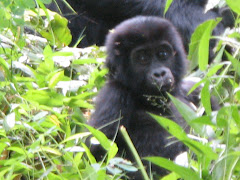
My porter was Milton and he is 24 years old and has lived in Bwindi his entire life. I didn't really think I needed a porter, but once I saw the grade I would be climbing, the muddied and overgrown path (and because it helps out the local economy for a price of $15), I relented. A few hours before we started our trek, two trackers went up before us to visit the last place this gorilla group was. We were going to find a family of 19 gorillas with one silverback. Recently there were two silverbacks, but they got into a fight and one ran off with a couple of females to start his own group. After about 3 hours of hiking we heard via walkie-talkie that the trackers had the family in their sights and we made a bee-line through a swampy area to get to them. I am finding it difficult to put into words how amazing it is to see these animals just hanging around being a family together. Babies rough housing and rolling around together and then scampering off into their mother's arms, females tending to the mighty silverback (who never looked directly at us but you could sense he was aware of our every move), and younger males eating pounds of leaves. Gorillas will consume anywhere from 130-170 pounds of greenery each day.
After staying with the gorillas for an hour (the max one is allowed), and through a rain storm (gorillas do not frolic in the rain, but prefer to wait it out in the thick underbrush), my group made its decent. It truly was a once in a life time opportunity and I am grateful I got the chance. I am almost embarrassed to be blogging about it as I can do it no justice. Forgive me.


Monday, November 23, 2009

Gorilla etiquette


When faced with mountain gorillas, here are a few things to keep in mind:

  • Never look a gorilla directly in the eye.
  • Never mimic a gorilla. You don’t speak their body language and something as simple as an arm raise, might signal something more menacing.
  • If you are sick, you shouldn’t visit with gorillas. They are so similar to us genetically, that they can contract our diseases and spread them rapidly throughout their family group.
  • Don’t ever piss off the silverback. He’s in charge and will charge you if he feels he, or his family, is being threatened.
  • Don’t approach gorillas using walking sticks as poachers once used them as spears, and that has remained in their collected memory. (Walking sticks by the way are highly recommended when tracking the gorillas as they tend to congregate is hard to reach (and very muddy) areas.)
  • When filming gorillas, do not use flash as the bright flashes freak them out, and could anger the silverback.
  • If you have already forgotten, don’t do anything to piss off the silverback. Think of the silverback as the most ornery, senior member of your family who believes that everything revolves around them. Now add a few hundred more pounds, a ferocious growl, razor sharp teeth and that’s your silverback.
  • Don't wear eyeglasses (or sunglasses) that you care about. Gorillas are known to take things off you.
  • Try to wear muted colors. Gorillas apparently don't like yellow, but as far as I can tell, this is only speculation.
  • I mentioned the silverback, right?

Killer instincts


Should you decide to go on safari while in Uganda, or visit some of its more remote places, there are a couple of important animal facts you need to keep in mind. The number one killer of humans on land, is the buffalo.* While it won't eat you, it will impale you and toss you around like a rag doll. It is best to lie flat on the ground should you encounter one, and wait it out.


The number one killer of humans in the water, is the hippo. While these portly beasts don't look scary (with their mouths closed), they are exceptionally fast. If you visit Queen Elizabeth National Park (one of Uganda's biggest), you will see lions and leopards and crocodiles, but keep in mind that it's not the animal with the biggest teeth you need to fear the most. And for goodness sakes, stay out of the water!
* mosquitoes are technically the number one killer of humans.

Yummy?

One of my favorite Ugandan foods also appeals to my childish side. It is called doodo and it tastes similar to dandelion greens. It can be sauteed, baked, or fried, but my preference? A big, steaming plateful of doodo.

Tuesday, November 17, 2009

Survivor training


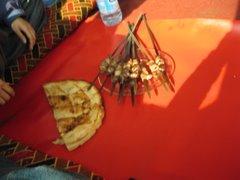
Coming to Uganda during the rainy season means sudden, but short, downpours, overcast skies, muddied streets, and time for their delicacy: grasshoppers. You can either buy them fresh (yes, still hopping) and prepare them on your own or you can opt for the ready-killed-and-ready-to-eat from any number of street vendors. They are generally priced by the cupful, but considering I am a novice, I asked for a spoonful (cost 50 cents). Fried in oil, generously salted and dusted with onion powder (to help disguise the smell of the bug), they taste remarkably like stale movie theatre popcorn. Even the irritating sensation of getting a kernel lodged in a molar is replicated, but this time, it's with a leg or tentacle. As I picked my teeth afterwards, I tried to refrain from thinking too much about it.

Monday, November 16, 2009

Dog-free Uganda?

One of the most startling observations I have had since arriving in Uganda are the lack of dogs. In most of the up-and-coming countries I have traveled to, dogs are everywhere. They tend to follow the trash, and despite Kampala's efforts to "Keep It Clean", trash is easy to find. But the dogs are in hiding. Except for one local supermarket where I am still a little unsure of whether "dog meat" is meant to feed man's best friend, or if it is the reason I can't find any dogs around.

Uganda dining 101


Admittedly I have only been here a few days, so I am no expert, but for those of you considering traveling here, I have a few dining pointers. The currency is the shilling which is basically 2000 to 1 USD. You will want to make sure you have a bunch of small bills as most places (at least the ones I go to), don't have change for anything upwards of $20 USD. The cost of a meal at a nice restaurant is approximately $8 USD, but you can easily eat meals for less than $3 USD. The "rich people's" diet consists of very starch and carbo-heavy items (e.g. rice, beans, mashed plantains, white bread), so if you want a balanced meal, it is best to stay to a poor person's diet which is where you will find your vegetables. If you are a mzungu (like me), the assumption will be that you will want your meats fried, but stay with what the locals do, and go for the grill instead. Word of warning here ... you might not want to do a "grill sample" unless you really like offal. My suggestion is to stick to the pieces of meat which are recognizable. Most people speak English, so asking questions isn't a problem, but learning a few basics like "thank you" in Luganda will get you props (and perhaps an even bigger smile). There is a sizable Indian population because many relocated here when the railroad was being built, so samosas and curries are readily available. As a side note, I have been told that we are currently in the height of "cricket season" so I am off to find some tasty morsels before I leave on the gorilla trek.

A bird of a different color ...


One of the sights you will get used to seeing in and around Kampala are birds, but not your ordinary bird. Imagine a bird you see everyday (a pigeon or a chicken perhaps) and now make it stand three feet stand and be able to look you in the eye. Add to it some disgustingly phallic features and that is what perches on the street corners here. On the good side, I have yet to see many ne'er-do-wells loitering - perhaps because of these unsightly creatures. Perhaps everyone has mistreated a bird in their past life and they collectively fear that these birds have returned to exact revenge. It is really the first time in my life that I have been less fearful of bird droppings, and instead am worried that I am about to be mugged by one of these feathered felons. The polite name for this bird species is Maribou Stork. Sounds so much nicer than some of the names I gave it!

Sunday, November 15, 2009

Into Africa

I have arrived in Uganda and am preparing my mzungu (non African) self to hit the streets of Kampala. This evening is a little extraordinary as I am going all out and staying at the Serena Hotel (one of Kampala's nicest). The last time I had anything to do with a Serena Hotel, it was in Kabul where the ex pats would go on Saturdays to enjoy electricity, brunch and a brief respite from the fact that we were in Afghanistan. That hotel was subsequently bombed, and there went our oasis. I am hoping for a better future for this Serena ... at least while I am here!

Thursday, September 24, 2009

Ecuador's rain forest


About a two hour drive north of Ecuador's capital of Quito lies a rain forest. The drawback? The rain. It really isn't rain but more of a constant mist that leaves everything damp. The humidity is so high, that a measly aspirin doesn't stand a chance and actually splits itself open. But aside from this, it feels very untouched which is hard to find the more globalization takes hold. This is a place where a simple walk can lead you towards pristine waterfalls. Where people care enough about co-existing with the natural inhabitants, that they create shelters for toucans to rest while they recuperate from a run-in with a puma or monkey. This is also where I learned a new life lesson: if you get an infection after falling, don't eat fish. It might sound like a Ecuadorian wives' tale, but trust me when I tell you not to risk it.

Monday, September 21, 2009

The Peruvian Amazon


I have trekked to some of the highest points in the Andes and decided I needed a good dose of low land to level me out. Next stop: Puerto Maldonado in the Southern Amazon. Actually, to say I went to Puerto Maldonado is slightly inaccurate. I was there, but only to get on a boat to go up the Madre de Dios river to get to a reserve where I hiked 2 miles through the jungle, which brought me to a lake where I then canoed for 30 minutes which finally brought me to my final destination: Sandoval Lake. The natural inhabitants of Sandoval are thousands of birds, snakes and insects, endangered giant river otters, and the rare black caiman (crocodile). If you want to fall off the grid and land in a place of extreme humidity, limited electricity, and surround yourself with a symphony of animal mating calls, this is the place! In between gorgeous sunsets, jungle hikes, and channeling Tarzan, I also found time to rest my weary legs.

Andean pet food


Perhaps I was inspired by Anthony Bourdain putting odd things in his mouth, or maybe it is that my taste buds are shot from over-spicing, but I have tried a good number of traditional Andean foods and enjoyed them thoroughly. First up, cuy or guinea pig. I had hamsters as a child, but never a guinea pig, so perhaps this made it easier. Cuy is generally roasted and tastes like a tougher or gamier quail. You can also get it breaded and fried, but since I didn´t see anyone eating a Cuy Parmesan, I avoided it. Another favorite was anticucho or cow hearts. It definitely helps to only eat a small portion (I would never order it as my main dish, but sharing it as a appetizer works great). It also helps that they prepare it in strips that look familiar versus cutting it out in the shape of a heart. I also found that Alpacha is good for something other than just their hair, but then again, if you slathered enough butter on a cashmere sweater, I'd probably enjoy that too. (no animals pictured were actually eaten).

Friday, September 18, 2009

The secret of Machu Picchu


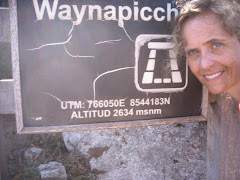
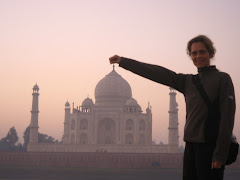
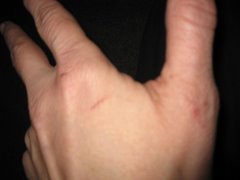
Machu Picchu, the lost Incan city is amazing. Breathtaking. None of my pictures can capture its glory in the dawn hour. None of my pictures can capture the narrow and steep trails that take you to the most spectacular vistas (but from what you see above, I tried to give you a glimpse). But what I have chosen to share with you instead about Peru´s national treasure is a secret of sorts; one that few guidebooks tell you about. Peru´s most atrocious beast lives within the walls and steps of Machu Picchu: the sand fly. These little buggers feast of your skin without you kknowing it. After just a few minutes of exposed leg skin, welts will begin to form. In fact, in the area of Aguas Calientes (where overnight tourists stay), you will see a parade of welty legs. If you are lucky, the bite will become itchy, welt up, and disfigure you for a few days. View it as a badge of honor. The unlucky ones will be snacked upon, but instead of welting up, small pin prick dots will litter your skin. Those dots will stay with you for 1-2 months. The best advice I can give is to wear long pants, tucked inside socks, and spray deet over your entire body. You won´t win any beauty contests, but it will make for a more pleasant few days. While the legs are favored, if your arms get close enough to the ground (which happens if you climb the steep Wanyapicchu), you will be devoured in the upper region too. This warning applies only to Machu Picchu and not along the Inca Trail. There, lama dung is your greatest threat. But honestly, if you can´t hack a little dung, perhaps you want to consider a cruise instead.

Thursday, September 17, 2009

The pre-trek


Disregard my earlier posting about high altitude immunity. After a 8 hour trek (which should have lasted 5 hours), I am clearly not immune to the high altitude.
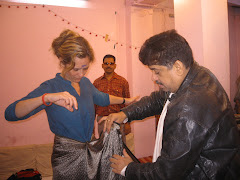
In fact, when I heard that a typical Andean custom was to mummify the dead in the fetal position, I was only too happy to take a "time out" of trekking to show how the dead would be wrapped.

Friday, September 11, 2009

Immunity

I think I am immune to the effects of high altitudes. Perhaps it is my years of living with lofty goals that have prepared me for life at 3326 meters. While I should be extremely tired, short of breath, light headed and have no appetite, I have been the complete opposite: energized, alert and ravanous. I have been drinking cocoa tea by the bucket loads so you´d think my frequent bathroom sprints would tire me out, but not yet. I am readying for a pre-trek trek to Saqsaywaman (say it in a way that sounds like a sing song version of "sexy woman"), where I might find out that my immunity to the high altitude is in fact fictious. But whatever happens, it had better not stand in my way of trying my first alpaca-burger!

Sunday, August 3, 2008

Harvest season

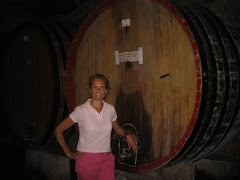
Friends of mine decided to up and move from city life in Paris and invested in farm life in Tuscany. They bought an old home and have spent the past two years learning how to be olive oilers. Wine harvest season is generally in October, but for olive growers it is generally in December. It is believed that by December, olives are ripe and juicy enough to fall naturally from the trees, thereby producing the greatest amount of oil. [btw: nets are laid down in late October to start catching the olives so you can avoid all the hand picking.] The December time frame is for everyone BUT the people who live in Tuscany who espouse the virtues of a blended oil (ripe olives are mixed with some of their greener brethren.) This is an example of supreme rationalization. Harvesting olives in December (at least in Tuscany) means wearing winter jackets and gloves and standing out in the cold for hours. Harvesting in November means light jackets and sunny days. This is probably why I could never be an olive oil tycoon. I imagine no one would want to buy an olive oil that was harvested in September (when I would still be wearing shorts!)

Saturday, August 2, 2008

The hunt for tartufo

I headed to Alba, the epicenter for Italian black and (when in season) white truffles. I was fully prepared to get knee deep in muck following pigs around as they snorted down the delectable fungi, but I didn't have to do much mucking around. It seems that the Italians have found a cleaner (and less smelly) way to find the tartufo. They use dogs. The pigs, it seems, act as pigs do and while they snort, they also tend to mangle. Dogs, on the other hand, are daintier and less prone to trample the rare mushrooms which can cost a (caution: hyperbole ahead) gazillion dollars an ounce. In the end, I found it was easier to find the truffles without the help of any animal and just walked in to a store.

Tuesday, July 29, 2008

No Country for Old Cows


For a place where eating meat and cheese are national pasttimes, I have seen only two cows. The rolling hillsides are perfect for uddered animals, yet none roam. It seems that, in Italy, cows do not get put out to pasture as land is at a premium (better suited for growing grapes or olives). While the thought of cows living their lives indoors unsettles me, I seem to quickly forget my qualms as I drown my breadstick in tallegio. I guess I will never be a spokesperson for PETA.

Sunday, July 27, 2008

Spineto Scrivia


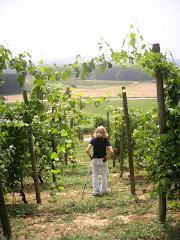
This is your typical Piedmont region town. The church stands in the center of the piazza, there is one bar/cafe where the town people (350 of them) meet to gossip and have their morning espresso. The land around it is filled with vineyards, bee keepers, and fruit agriculturists, and everyone stops what they are doing between 12:30pm and 3pm to enjoy what life has to offer them.
At night, parents frolic with their children in tow, and when it gets too late .. well, kids are resourceful!

Highlights from the Emilia-Romagna Region

Parma. Land of parmesan cheese and parma ham. You cannot help but fall in love. If you are a vegetarian, you might feel differently as the smell of cured ham hangs heavily over the city. It is also one of the few places in north-central Italy I have traveled to where I saw non-tourist non-Caucasians.


Castell Arquato is a medieval town tucked between the rolling hills that this region is known for. The town is small and all roads leading up to the castle are steep and cobble stoned. I wonder what happens to the people who live here when it rains. Perhaps they all head to Casa Benna.
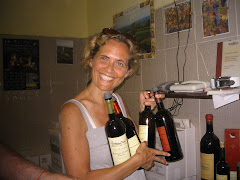
Casa Benna attracted my attention because unlike most things in Italy, it says that it is open all the time. Imagine, a place you can get wine at all hours. I have found heaven on earth, and its tour guide is Maria Benna. Who wouldn't want to sample wine from this lady ... in fact, I was ready to buy before she opened the first bottle (actually I opened the bottles as her hands looked like they have done enough wine uncorking and pasta rolling for three lifetimes!)